Why Hog Producers Need a Holistic Approach to Margin Optimization
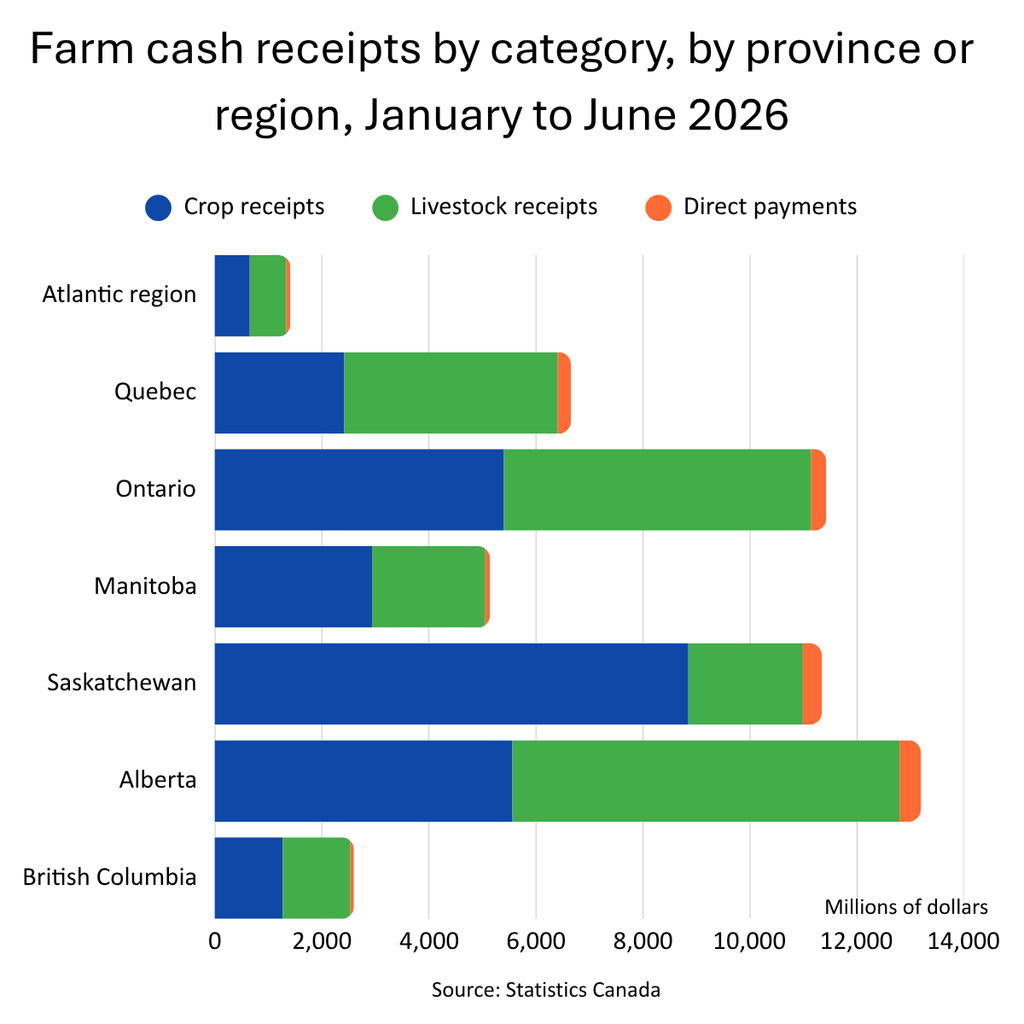
The latest Statistics Canada data on farm cash receipts for the first half of 2026 show an overall increase of 4.2%, bringing total receipts to $51.8 billion. These receipts measure the gross revenue of farm businesses, not their net profit, as producers must still cover operating expenses, repay loans and account for depreciation.
For the hog sector, receipts rose by less than 1%.
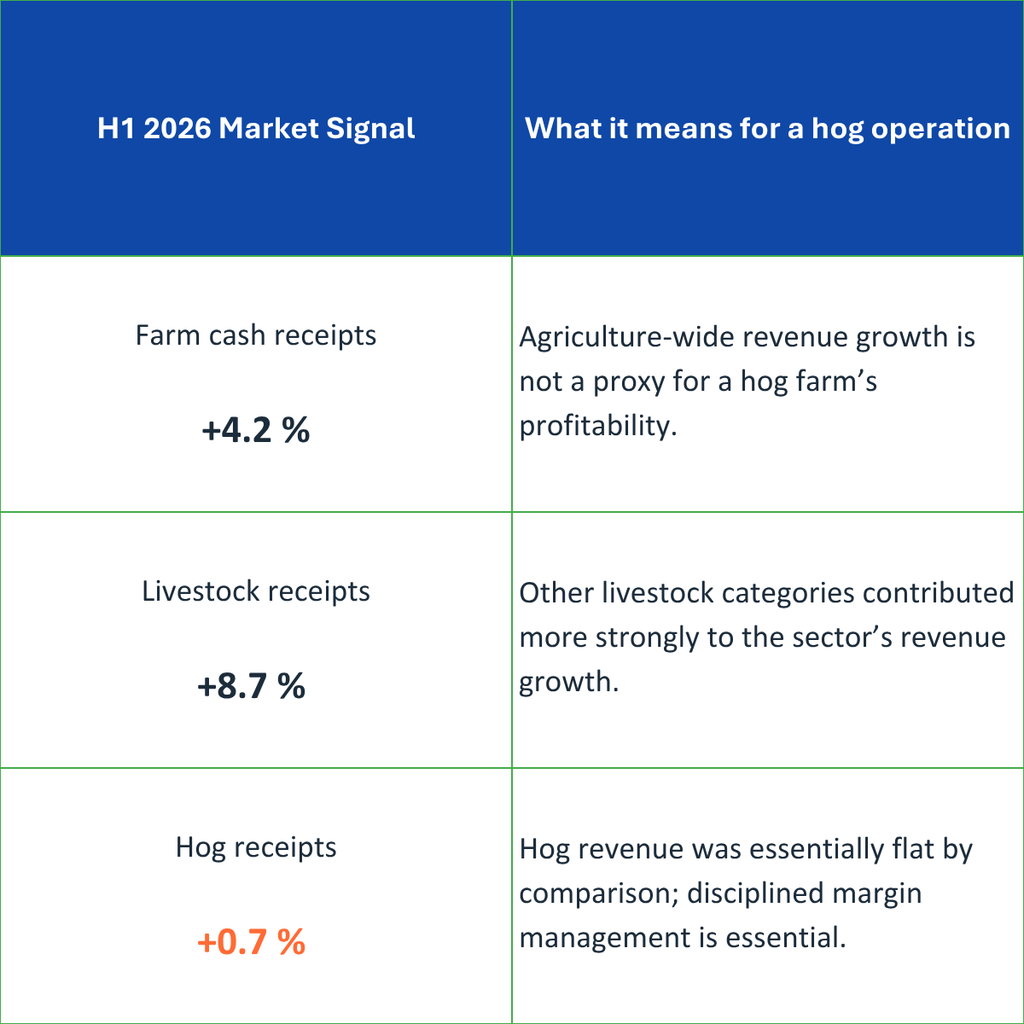
When hog prices are not driving revenue growth, the viability of a farm depends even more heavily on its ability to protect its margins. Producers must therefore look beyond whether the selling price of hogs appears attractive and determine whether expected revenue will cover all costs while generating an acceptable margin.
Hog-sector receipts remain virtually unchanged
The livestock sector recorded strong overall growth of 8.7%, bringing receipts to $23.2 billion. This increase, however, was driven primarily by cattle, whose receipts rose by 14.2%. A 17.7% increase in prices more than offset a 3.8% decline in the number of cattle marketed. Hog producers did not benefit from the same favourable conditions. Their receipts were virtually unchanged at $3.56 billion, increasing by just 0.7%. Hog production was the only major livestock category that did not benefit from higher prices during the period.
Crop receipts increased by 4.1% during the first half of the year.
Meanwhile, direct payments under agricultural support and financing programs fell by 35.5% to $1.5 billion. AgriStability payments declined by 27.6% to $316 million. Crop insurance payments also fell sharply, dropping by 48.6%, or $680.2 million. This decline—particularly pronounced in the Prairies—accounted for more than 80% of the overall reduction in direct payments.
Managing risk more effectively through an aggregate approach
These figures also illustrate significant differences among provinces, highlighting the many sources of volatility facing farm businesses. Volatility can affect both revenue and costs. Addressing it requires moving beyond a narrow focus on prices toward a genuine margin-management strategy. This principle is the foundation of Agrintel’s aggregate approach.
Rather than analyzing hog selling prices in isolation, this methodology brings together all the key variables that determine the feed margin:
- Hog sales
- Piglet purchases
- Corn and soybean meal costs
- Exposure to fluctuations in the CAD/USD exchange rate
By expressing each variable on a common basis—in Canadian dollars per 100 kilograms of hog production—the farm can assess the actual effect of market movements on its overall profitability.
A decision to sell hogs may appear attractive, but if feed or piglet costs rise at the same time, the farm’s overall profitability may still deteriorate. Managing only one source of risk leaves the other parts of the business fully exposed.
The importance of a rigorous operating budget
In addition to a holistic approach, effective risk management requires discipline. The objective is not to predict market movements or speculate on market highs and lows. It is to begin with a rigorous operating budget tailored to the specific structure of each farm.
Producers must analyze their actual operating data, including:
- The monthly schedule for marketing animals
- Carcass weights and feed-conversion ratios
- Actual corn and soybean meal requirements
- The farm’s financial capacity and the minimum margin required to meet its obligations
Using these indicators, producers can identify opportunities to optimize margins across their full cost structure—including inputs and currency exposure—instead of pursuing a single selling-price target.
Do not leave your farm’s profitability at the mercy of individual market factors. Contact the Agrintel team to structure your margin-management plan and support the long-term viability of your operations.